
Dental Bridge vs. Implant: Which Is Right for Missing Teeth?
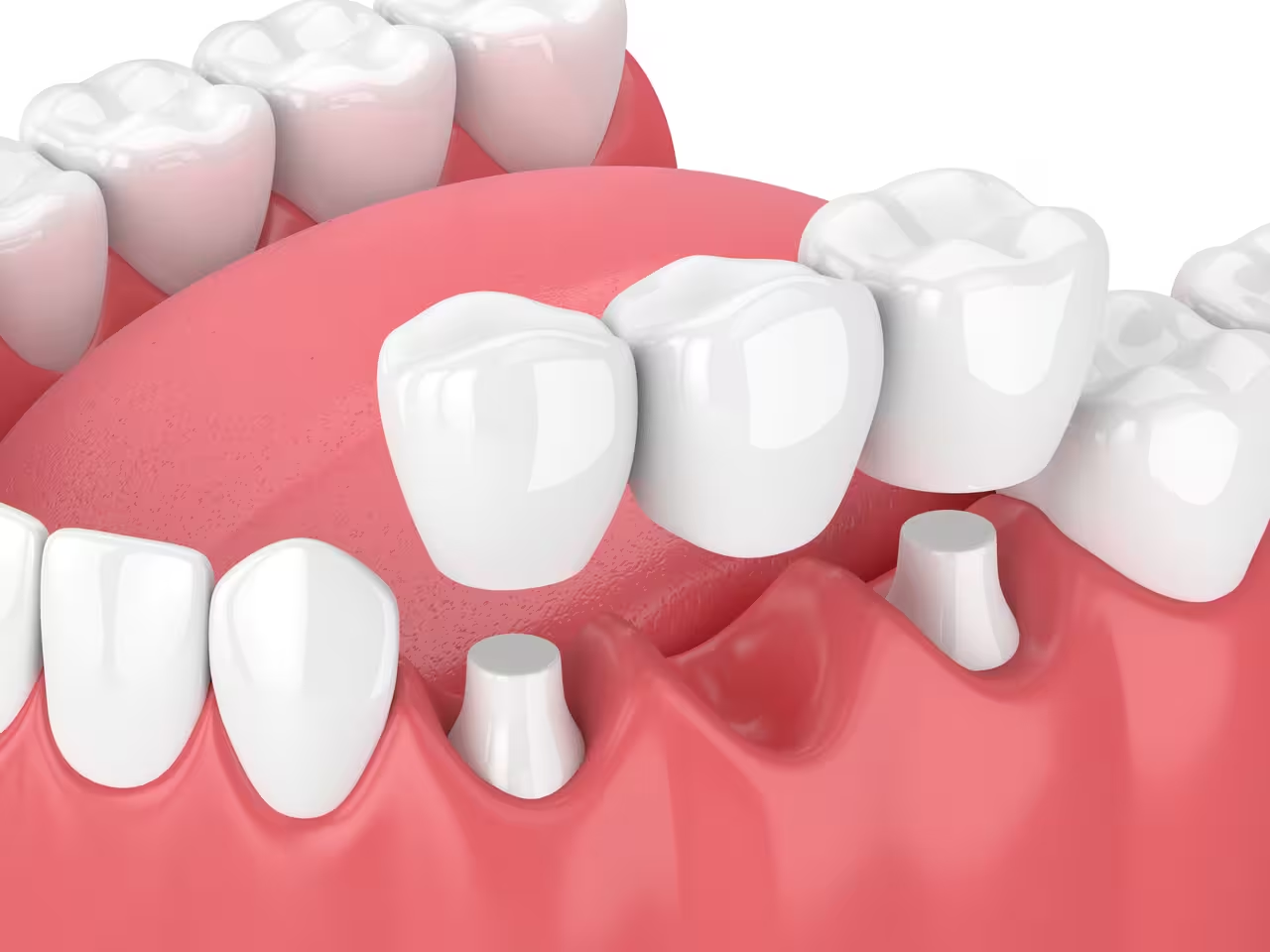
For replacing a missing tooth, dental implants offer the longest-lasting, most natural result — a titanium post that replaces the tooth root and can last a lifetime — while dental bridges offer a faster, often less expensive solution that relies on the neighboring teeth for support. The right choice depends on your budget, timeline, bone health, and the condition of the surrounding teeth. Both restore your ability to eat, speak, and smile with confidence.
What Is a Dental Bridge?
A dental bridge literally bridges the gap left by one or more missing teeth. It consists of artificial teeth (called pontics) anchored in place by crowns on the natural teeth on either side of the gap. The bridge is fixed permanently — it doesn't come out like a denture — and restores the appearance and function of the missing tooth.
Bridges are typically completed in two to three weeks across a couple of appointments, making them a faster solution than implants.
What Is a Dental Implant?
A dental implant replaces both the root and crown of a missing tooth. A titanium post is placed into the jawbone, where it fuses with the bone over several months to form a permanent foundation. A custom crown is then attached to the post. Because the implant integrates with the bone, it looks, feels, and functions like a natural tooth — and it helps prevent the bone loss that normally follows tooth loss.
Bridge vs. Implant: The Key Differences
Here's how the two options compare across the factors that matter most:
- Longevity — implants can last a lifetime with proper care; bridges typically last 10-15 years before needing replacement
- Bone health — implants preserve jawbone by replacing the root; bridges do not, so some bone loss continues under the gap
- Impact on neighboring teeth — bridges require filing down the adjacent healthy teeth to place crowns; implants leave neighboring teeth untouched
- Timeline — bridges are completed in weeks; implants take several months due to the healing and fusion process
- Upfront cost — bridges usually cost less initially; implants cost more upfront but often last longer, making them comparable or better over time
- Maintenance — both are cared for like natural teeth, though bridges require special flossing underneath the pontic
Which Option Is Right for You?
A dental bridge may be the better choice if you want a faster, lower-upfront-cost solution, if the neighboring teeth already have crowns or large fillings, or if bone loss has made implant placement more complex.
A dental implant may be the better choice if you want the longest-lasting result, if you want to preserve your jawbone, if your neighboring teeth are healthy and you'd rather not alter them, or if you're replacing several teeth (in which case options like All-on-4 implants may apply).
The best way to decide is a consultation. At our Indianapolis office, Dr. Brauer uses 3D CT scanning to evaluate your bone structure and recommend the option that fits your anatomy, timeline, and budget.
What About Cost and Insurance?
Both bridges and implants are often partially covered by dental insurance, though coverage varies by plan. Since dental benefits typically reset at year-end, timing your treatment strategically can help you maximize coverage across plan years. Our team verifies your benefits and reviews all costs before treatment begins.
For a closer look at implant longevity, see our related article on how often dental implants need to be replaced.
Talk to an Indianapolis Dentist About Replacing Missing Teeth
Brauer Family Dentistry serves Indianapolis and the surrounding communities of Castleton, Fishers, Carmel, Noblesville, and Geist. Dr. Ted K. Brauer has been restoring smiles with both bridges and implants since 2003, using 3D CT scanning for precise, personalized treatment planning.
